
Session 5 – Technical Development/Emerging Technologies
Chairs: Michael Kirschbaum, Potsdam Toralf Kaiser, Berlin
Speaker: Dr. Marco Di Berardino, Fa. Amphasys
In the session on “Technical Development / Emerging Technologies,” innovative approaches to addressing cytometric challenges will be presented. This includes exceptional analytical techniques in sorting processes, as well as advancements in device development and technical improvements of cytometric instruments. Experts will cover the latest developments in the impedance-based analysis of cells and particles and showcase microfluidic techniques that enhance the precision and efficiency of cytometric analyses. We will learn about solutions for analyzing or sorting particles of extraordinary sizes, properties, or handling requirements. In summary, novel technical strategies will be highlighted that overcome existing limitations and open up new possibilities for research, therapy and diagnostics.
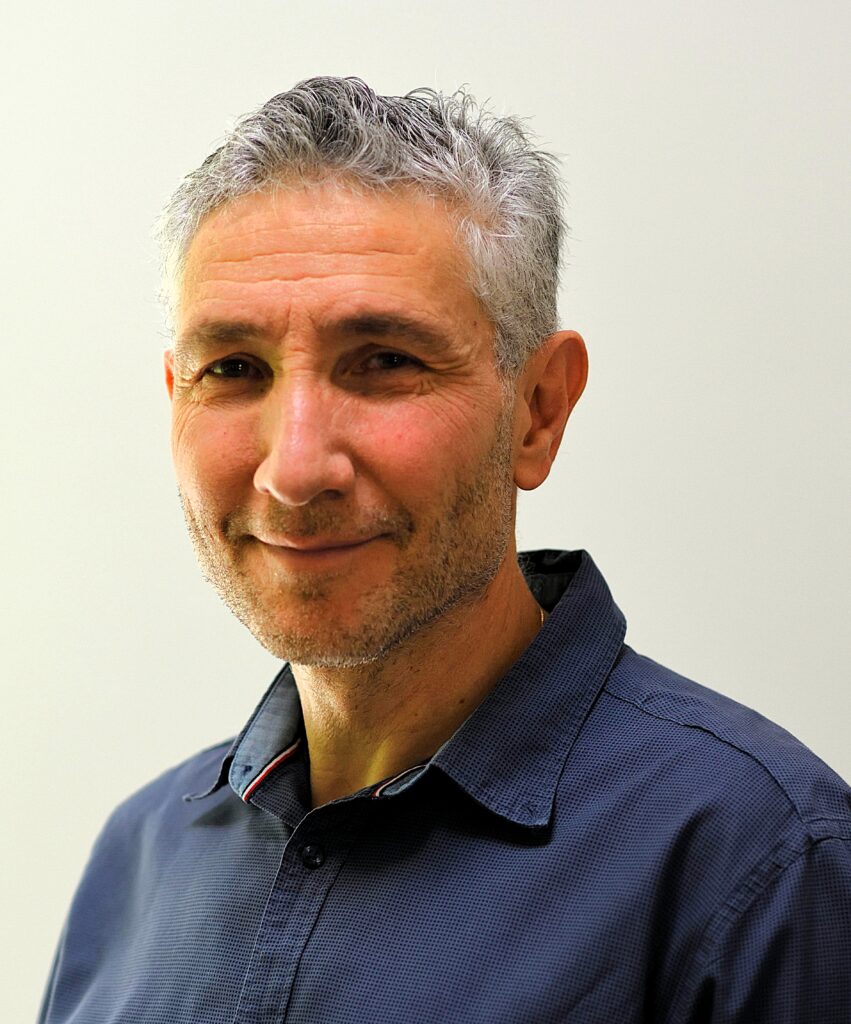
Impedance Flow Cytometry: From Fundamental Single-Cell Analysis to AI-Driven Bioprocess Intelligence
Marco Di Berardino
Fa. Amphasys
Impedance Flow Cytometry (IFC) is a label-free single-cell analysis technology that combines the Coulter Counter principle with modern microfluidics and semiconductor technologies. By measuring the electrical properties of individual cells at multiple frequencies, IFC reveals cell size, membrane integrity, and intracellular features without staining or labeling. This keynote introduces the fundamentals of IFC, traces its evolution from pollen analysis to biotechnology and bioprocessing applications, and presents selected case studies. It concludes with an outlook on AI-enabled data analysis and predictive bioprocess control.
Marco’s bio:
Dr. Marco Di Berardino received his PhD in Microbiology from ETH Zurich. After a brief period in the pharmaceutical industry working on antibiotic development, he moved into the field of diagnostic instrumentation, developing automated liquid-handling platforms for medical applications. In 2004, he initiated the development of an impedance flow cytometer based on technology originating from a PhD thesis at the École Polytechnique Fédérale de Lausanne (Switzerland). When the original project was discontinued, he co-founded Amphasys to further develop and commercialize the technology. Under his technical leadership, Amphasys introduced the world’s first commercial chip-based high-frequency impedance flow cytometer, establishing impedance flow cytometry as a practical tool for label-free single-cell analysis. Today, Dr. Di Berardino serves as Chief Technology Officer of Amphasys AG in Lucerne, Switzerland, where he continues to drive innovation in cell analysis for research, biotechnology, and bioprocessing applications.

Holographic vibration spectroscopy: Probe- and contact-free viscoelastic analysis of adherent cells at high throughput
Bob Fregin1,2, Stefanie Spiegler1,2, Eric Schneider1, and Oliver Otto1,2
1 Institute of Physics, University of Greifswald, Greifswald, Germany
2 DZHK (German Center for Cardiovascular Research), Partner Site North, Greifswald, Germany
Cell mechanical properties can serve as inherent biomarkers of cell state, fate, and function, revealing comprehensive and fundamental information about a cell. Several high-throughput methods with analysis rates beyond 1,000 cells per second are available to characterize cells in suspension, e.g., peripheral blood cells, without any labeling.
However, fast and robust methods for adherent cells are lacking, even though the majority of cells (by mass), e.g., in the human body, are aggregated into tissues. Most existing techniques for measuring the mechanical properties of adherent cells suffer from low throughput, whereas some methods enable parallel measurement of many cells in a tissue at a time. However, often tracers need to be integrated into the tissue, such as magnetic particles, beads, fluorescently labeled beads, oil droplets, or ferrofluid microdroplets, which potentially influence tissue integrity.
Here, we are closing this methodological gap by introducing a new probe- and contact-free method for label-free mechanical phenotyping of adherent cells at high spatiotemporal resolution. Cells in an aqueous solution of high viscosity adhere to a surface and are excited mechanically by a vibration with varying frequencies. Their response is determined optically from cell height oscillations utilizing holographic laser Doppler interferometry. By analyzing vibrational frequency bands, vibrational amplitude and phase can be reconstructed for every single pixel of our camera sensor.
In proof-of-principle experiments, we demonstrate the applicability of our novel technique on first, a liquid-liquid interface, and second, a monolayer of adherent cells.

A custom-built cell sorter for label-free sorting with scattered light and AI
Daniel Kage
Kage1, V. Devaraj1, A. Eirich2, J. Popien2, B. Grothe2, A. Wolf1, J. Kirsch1, K. Heinrich1, K. v. Volkmann2, T. Kaiser1
German Rheumatology Research Center (DRFZ) – Flow Cytometry Core Facility
APE Angewandte Physik und Elektronik GmbH
Label-free analysis and sorting of cells and other biological objects is gaining more and more relevance. At the forefront of this development are imaging technologies that aim to combine the advantages of microscopy with those of flow cytometry. While this is the intuitive way of looking at cells, other approaches for the measurement of intrinsic cell parameters are promising candidates as well.
One of these alternative approaches is multi-angle pulse shape flow cytometry (MAPS-FC). It collects the light scattered by cells or particles at multiple angles and with sub-µs resolution during the cell transit. The resulting high-dimensional datasets contain valuable information about the particles analyzed. This technique has proven useful in various fields from cell proliferation analysis over automated label-free immunophenotyping, microbiome analysis, and parasite identification to functional cell analysis.
Here, we describe how we translated these capabilities from a custom-built analyzer into a high-speed cell sorter, which enables sorting decisions made by artificial intelligence for label-free cell sorting. We will report on the technical development process and (hopefully) present first outcomes of a completely new view on defining target populations for cell sorting.